How to bring in a character or homebrew with Claude Code
The short answerBy hand, Archivist's Builder and homebrew editor make the same things: press New character or New homebrew…. With Claude Code, put the sheet's PDF or photos in a folder, start Claude Code there and ask it to make the character in Archivist. It reads the sheet, asks you what the sheet leaves open, and makes the character, which you then check on your Characters page and finish in the Builder. Homebrew works the same way, from a PDF or pasted text, into a compendium of yours.
- For players and DMs
- 16 short steps
- Updated 19 November 2026, for Archivist 1.7.0
Connect Claude Code first: see Connect Claude Code to Archivist. The example is Grendal the Wary's sheet as a PDF, and the Drowned Coast, Archivist's own sample homebrew.
By hand, in Archivist
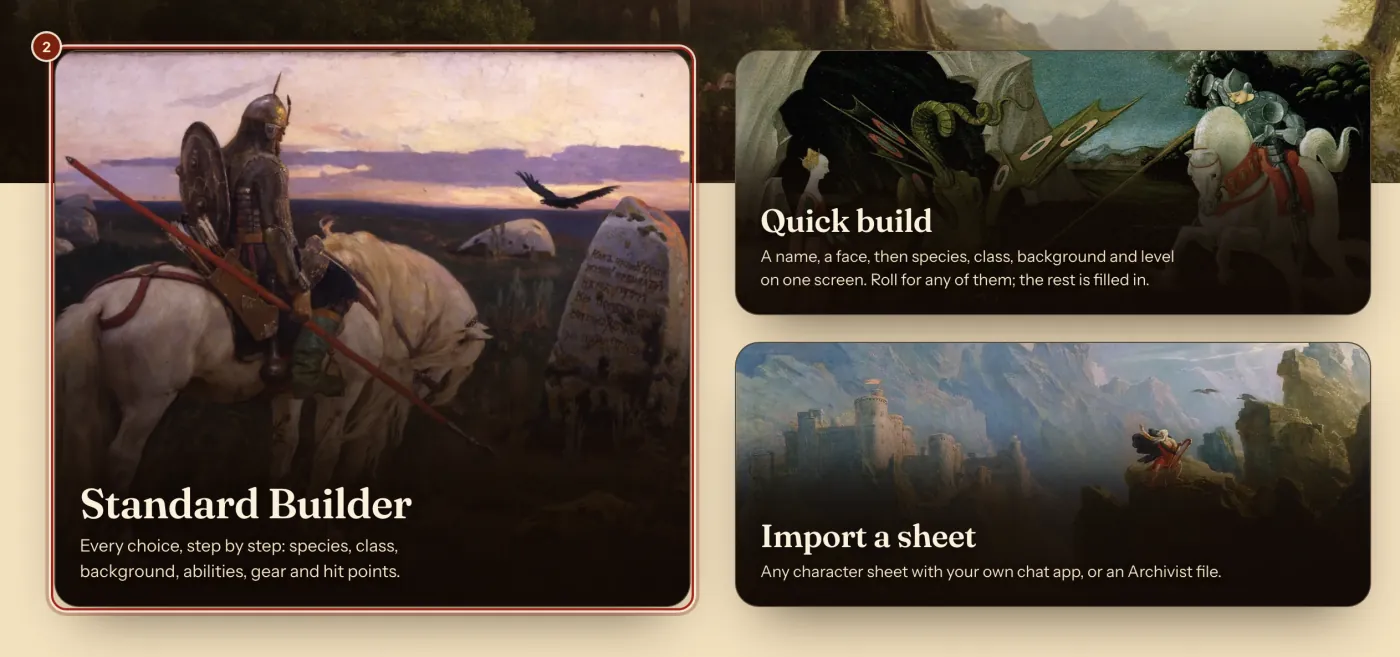
- On the Characters page, press New character.
- Press Standard Builder and copy your sheet in step by step: species, class and levels, background, abilities, equipment and hit points. Or press Quick build for a ready character to change as you like.
For homebrew, the homebrew editor does the same by hand: press Compendium, then the ⋯ beside Homebrew and New homebrew…. Make a character, Quick build and Make homebrew from scratch walk each one.
Bring in a character
- Put the sheet in a folder: a PDF, or a photo of each page, such as grendal-the-wary.pdf.
- Open a terminal in that folder, start Claude Code with
claude, and paste:PromptMake this character in Archivist from the sheet grendal-the-wary.pdf in this folder.
Three ways to hand it over, each with the sample sheet. A PDF: grendal-the-wary.pdf, from that page. Pictures: its two pages as pictures, grendal-the-wary-page-1.jpg and grendal-the-wary-page-2.jpg. Text: the page's text under the prompt. For pictures, name them all in the prompt, or say "the pictures in this folder".
- If it asks anything, answer: it gathers its questions together and gives you the options it sees.
- When it asks to use an Archivist tool that makes or changes something, answer Yes.
It reads the whole sheet first. With a sheet that settles everything, such as the sample sheet, it can save the character without a question. When the sheet leaves something open that it cannot work out, such as the armor behind a printed Armor Class or where an Expertise comes from, it asks first and saves nothing until you have answered. For something on the sheet that none of your compendiums has, it asks you for its text, to make it as your own homebrew, or whether to leave it out for now: Archivist tells it never to write rules from memory.
- Read its report.
When it is done, it says the character is saved, with a link that opens it, and whether every number matches your sheet. Then it lists what it brought in, what it worked out for you to check (such as the base ability scores, from a sheet that prints only the totals), anything it could not bring in, and the picks left for the Builder.
Check it in Archivist
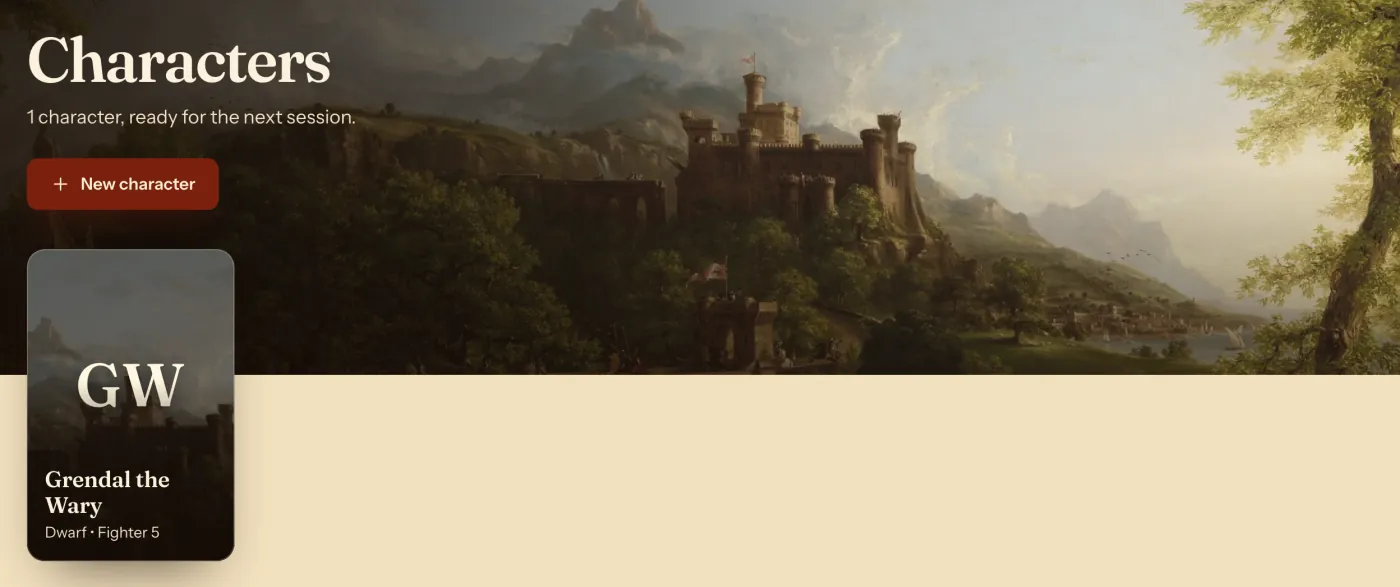
- Open the link your chat app gives you, or press Characters in Archivist: the new character is there.
- Compare its Armor Class, Hit Points, saves and skills with your sheet. Any number that differs is in your chat app's report, with why.
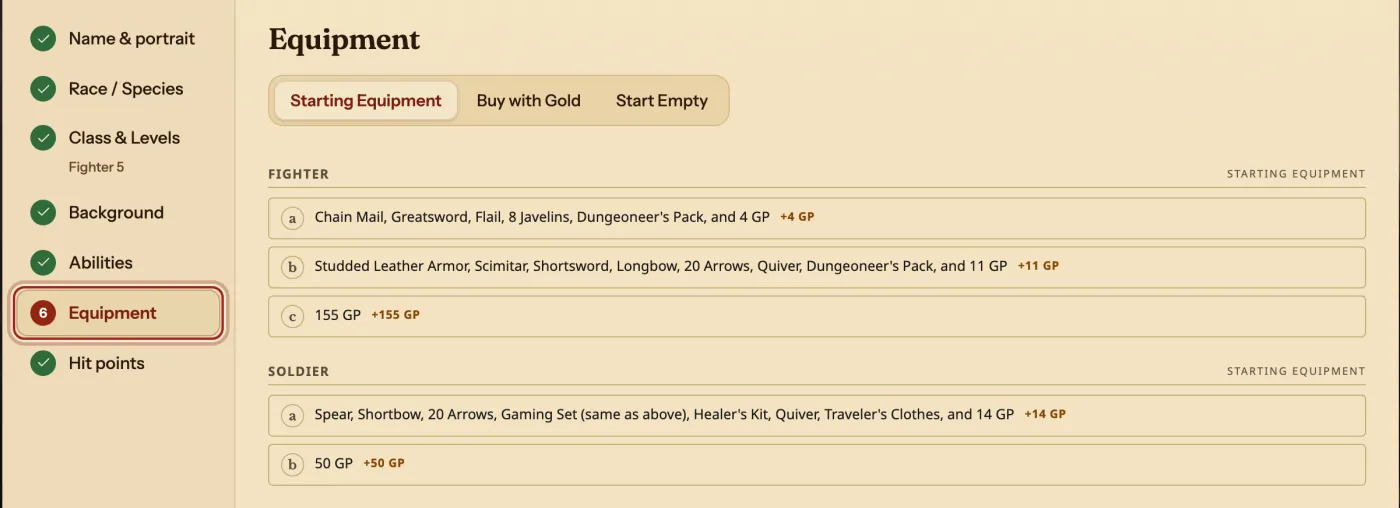
- Press the gear beside the character's name, then Builder. A step with a pick still open shows its number in the list of steps instead of a tick, such as Equipment when the sheet does not say which starting kits were picked. Make the picks you want, then press Done at the end of the steps and Keep changes.
Your chat app leaves open only what the sheet does not settle, such as the starting kits: the gear itself is on the sheet already.
Bring in homebrew from a PDF, a link or pasted text
- Put the homebrew PDF in the folder and paste:Prompt
Add the monsters, spells and items in drowned-coast.pdf to a compendium in Archivist.
Three ways to hand it over, each with the sample page. A PDF: drowned-coast.pdf, from that page. A link: the page's address. Pasted text: the page's text under the prompt. If your chat app cannot open a page, paste its text instead.
- Or paste a page's address, such as the sample page's:Prompt
Add the monsters, spells and items on this page to a compendium in Archivist: https://archivist.gg/sample-homebrew/
If Claude Code cannot open the page, paste its text instead.
- Or paste the text into the prompt itself:Prompt
Add the monsters, spells and items in this text to a compendium in Archivist:

(paste the text here)
- Answer what it asks, such as which compendium when you have more than one, or a number the text leaves open.
- When it asks to use an Archivist tool that makes entries, answer Yes.
When you have more than one compendium of your own, it asks which one the entries go in, or offers to make one; with one, it uses it and tells you so. It asks about any number the text leaves open, such as a recharge or a damage die. What the SRD or your compendiums already have is linked, not written again.
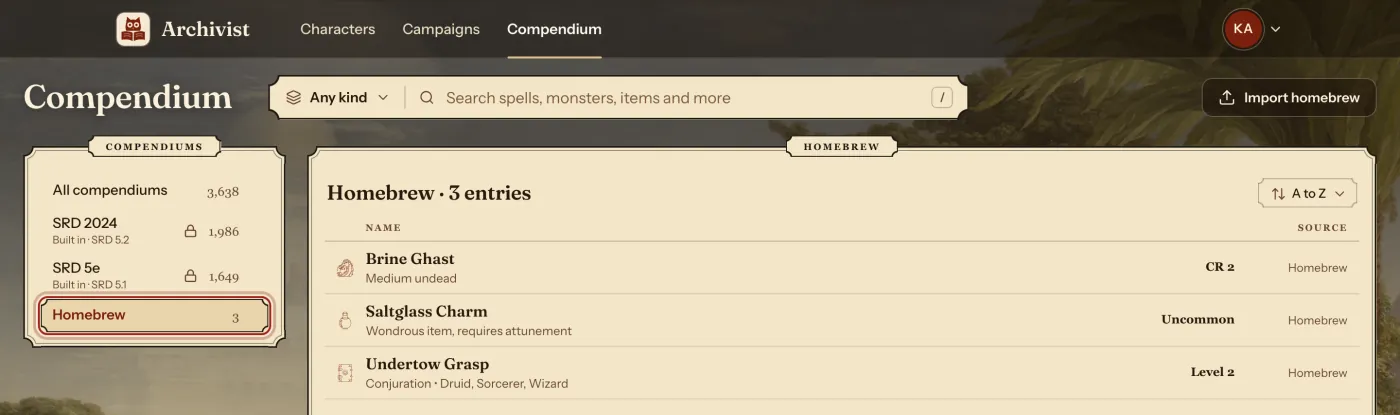
- Press Compendium in Archivist and pick the compendium in the Compendiums list on the left: the new entries are there. Open one to check it.
Your chat app's report lists the entries it made, the ones it linked instead because they were there already, and anything the player applies by hand.
Questions
Can it bring in a whole book?
Yes. Name the book's PDF and ask it to bring the whole book into a compendium of its own. See Bring a whole homebrew book into Archivist.
Can I paste the sheet's text instead of a file?
Yes. Paste it after the prompt: Make this character in Archivist from this sheet: and then the text.
What if it stops halfway?
Ask it to carry on. It looks at what is in Archivist already and goes on from there.
Can I keep a copy before it changes a character I already have?
Yes, and it is a good idea: see Keep a copy of your character. A change saves at once.
Keep going
- Connect Claude Code to ArchivistOne command in a terminal, then sign in with /mcp.
- Prompts to copy for your chat appCheck the connection, bring in a sheet, a book or homebrew, and fix notes.
- Import a character from a PDF or a photo of your sheetGive your chat app a PDF, photos or the text of any sheet, and it makes the character.
- Bring in homebrew from a PDF, a web page or pasted textGive your chat app the PDF, the page or the text, and it makes the entries.